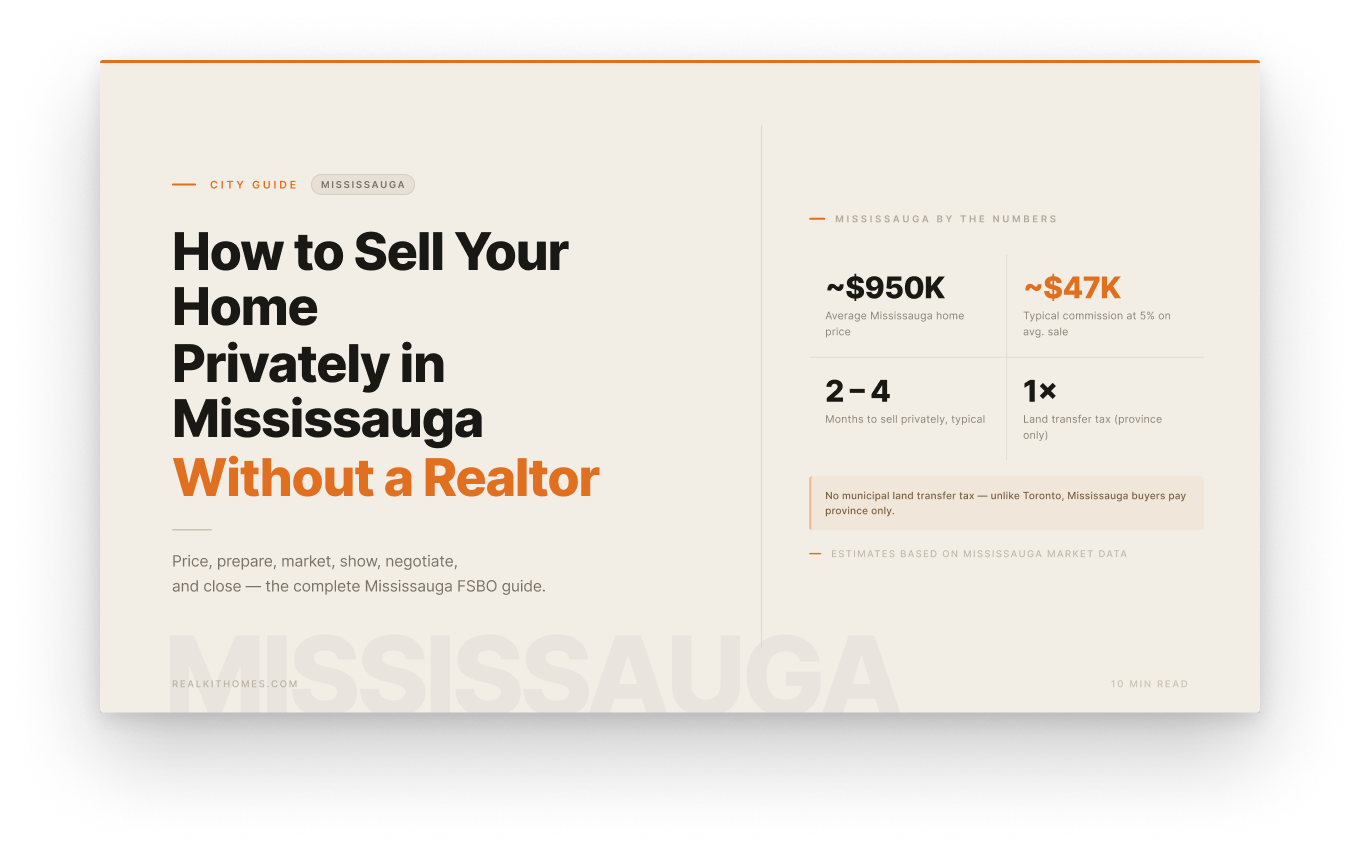
1.Selling Privately in Oshawa
Yes, you can sell your house privately in Oshawa without hiring a listing Realtor. As the owner, you can price and market the property, communicate directly with buyers, arrange showings, receive written offers, negotiate terms, and work with an Ontario real estate lawyer to close the sale.
A private sale does not mean an informal sale. You take responsibility for the work that a listing representative would normally manage, including:
- Researching a realistic asking price
- Preparing the home and gathering documents
- Creating an accurate listing with clear photos
- Responding to buyer and buyer-agent questions
- Scheduling and managing showings
- Tracking feedback and follow-up
- Reviewing written offers and counteroffers
- Coordinating with your lawyer through conditions and closing
Oshawa has a varied housing mix. Buyers may be looking at older detached homes near central Oshawa, family homes in north Oshawa, townhouses, newer subdivisions, condos, properties with finished basements, or homes that offer a practical commute through Durham Region and into the GTA. That means buyers will compare your home against more than just nearby sale prices. They will look at parking, lot size, updates, basement space, school access, commuting options, and the amount of work the property may need after closing.
Selling privately can work well for an organized homeowner who is prepared to manage those moving pieces. It is less suitable when the seller is unavailable for showings, uncomfortable with negotiations, or facing a complicated ownership, tenant, or property issue without professional support.
If you are still deciding whether FSBO fits your situation, it helps to understand the work that sits behind a private sale.
2.Is Private Selling Legal in Oshawa?
Ontario homeowners can sell their own property privately. You are not required to hire a Realtor to list, market, or negotiate the sale of a home you own.
A private sale still needs to follow the normal legal closing process. An Ontario real estate lawyer is normally involved to review or prepare transaction documents, deal with title matters, coordinate closing funds, arrange mortgage discharge if required, and complete the transfer of ownership.
Buyers can also have their own representative. A buyer agent works for the buyer and may request a showing, ask questions, bring forward an offer, and negotiate on the buyer’s behalf. As a private seller, you can decide whether and how you will work with buyer agents, including whether your sale strategy includes compensation for a buyer’s representative.
Speak with an Ontario real estate lawyer before signing a serious offer and whenever you are unsure about title, disclosure, tenancy, conditions, ownership, deposit arrangements, or closing. Your lawyer can advise on your actual transaction. This guide is general information, not legal advice.
3.Oshawa Property Considerations
Oshawa buyers do not assess every property the same way. A detached home with a large yard, a townhouse close to services, a condo apartment, and a tenanted investment property can each require different preparation and different conversations with buyers.
Detached homes, semis, and townhouses
Many Oshawa buyers are looking for more usable indoor and outdoor space than they may find in larger GTA centres. They may pay close attention to:
- Driveway capacity and garage parking
- Lot size, backyard use, and fencing
- Finished basement space
- Separate side or rear entrances
- Roof, windows, furnace, air conditioner, plumbing, and electrical updates
- Storage, laundry, and workshop space
- Access to schools, parks, shopping, transit, Highway 401, and GO service
- Whether the home needs immediate repair or cosmetic work
Be accurate when describing basement space. A separate entrance can be a meaningful feature, but do not market an area as a legal suite, income unit, or additional dwelling unless you have reliable information to support that description.
Older homes and renovation history
Some Oshawa homes have older construction, additions, finished basements, or renovations completed over many years. Buyers may ask about plumbing, electrical service, insulation, windows, roof age, drainage, or past water issues.
You do not need to renovate everything before selling. You do need to avoid vague claims. If you say a major system was updated, be ready to provide the approximate date and supporting records if you have them.
Gather invoices, warranties, permits, manuals, and contractor information before listing. These records can help buyers understand the home and reduce uncertainty during negotiations.
Condos and condominium townhouses
Oshawa condo and condominium-townhouse buyers usually look at the monthly condominium fee alongside the asking price. They may ask about:
- What the monthly fee includes
- Parking and locker arrangements
- Visitor parking
- Building rules and amenities
- Pet, rental, renovation, and move policies
- Reserve fund information
- Major building work
- Special assessments
- Status-certificate availability
A buyer may make an offer conditional on reviewing the status certificate. If you are selling a condominium property, start gathering current building information before listing and speak with your lawyer about documents and transaction-specific questions.
Tenanted properties
A privately sold Oshawa property can be tenanted, but tenants add important practical and legal considerations. Buyers may ask for the lease, current rent, access expectations, possession terms, and whether they intend to occupy the home themselves.
Do not assume that selling the property automatically determines when a tenant must leave. Tenant rights, showing access, the buyer’s plans, and the agreement terms can all affect the sale. Speak with a lawyer early if your home is tenanted so your marketing, showing process, offer terms, and closing expectations are handled appropriately.
4.Pricing Your Home in Oshawa
Do not use an Oshawa-wide average as your pricing strategy. A city-wide figure can hide large differences between neighbourhoods, property types, lot sizes, renovation levels, basement finishes, parking arrangements, and buyer demand.
Your home should be priced against genuinely comparable properties.
Look at:
- Recent sales of similar homes
- Current listings competing for the same buyer
- Listings that have sat on the market, been relisted, or reduced in price
- Condition, upgrades, and repair needs
- Lot size, location, parking, and garage space
- Bedrooms, bathrooms, layout, and usable basement space
- Condo fees, building features, parking, and locker arrangements where relevant
- The timing of the comparable sale and current competition
A renovated detached home with a double driveway in north Oshawa is not automatically comparable with an older detached home on a busier route elsewhere in the city. The same principle applies to townhouses and condos. Buyers compare the details, not just the bedroom count.
An illustrative pricing example
This example is illustrative only. It is not current Oshawa market data.
Imagine you are selling a three-bedroom detached home with a finished basement, single garage, and a larger backyard. You find three recent nearby sales.
One sold for more after a full kitchen renovation and updated bathrooms. Another sold for less because it needed a roof and had limited parking. A third had a similar layout but backed onto a busier road.
A realistic pricing review would consider your home’s condition, yard, parking, basement utility, location, major updates, and the current homes buyers can visit in the same price range. It would not simply copy the highest sale.
Avoid overpricing and underpricing
Overpricing can reduce showing activity, make competing homes appear like better value, and lead to price reductions after the strongest early buyers have moved on.
Underpricing can also be risky. If you do not have enough exposure, a clear showing plan, or a way to manage competing interest, you may not get the result you expected.
Your asking price should have a purpose. It may be designed to attract early interest, match a well-supported comparable range, account for a specific property advantage, or align with your moving timeline.
For a closer look at the difference between a market comparison and a formal valuation, review how a CMA and appraisal serve different purposes.
When to get outside pricing help
An independent appraisal or professional pricing input may be useful when:
- Your property is unusual or difficult to compare
- You have made a major addition or extensive renovation
- The property has acreage, multiple structures, or mixed-use features
- Recent comparable sales are limited
- Multiple owners disagree about value
- You need an independent opinion before making a major decision
An appraisal or pricing opinion can inform your strategy, but it does not guarantee a buyer’s offer or what a lender will approve.
5.Private-Sale Costs and Commission Context
Selling privately may reduce or remove the cost of hiring a traditional listing representative, but it does not make the sale cost-free.
Potential costs can include:
- Legal fees and disbursements
- Mortgage payout, discharge, or prepayment costs where applicable
- Cleaning, repairs, painting, staging, photography, and floor plans
- Listing-platform or advertising costs
- Moving and storage
- Condominium document costs, where applicable
- Property-tax, utility, and condominium-fee adjustments
- Buyer-agent compensation, if you choose to offer it
Commission structures and amounts vary. Some private sellers offer compensation to a buyer’s representative because many active buyers work with agents. Others do not. The approach you choose can affect who sees the listing, the conversations you have with buyer agents, and the offers you receive.
Land transfer tax is generally a buyer-side cost in an Oshawa purchase. It is not normally a seller closing cost, but understanding the buyer’s total budget can still be useful when discussing price and terms.
An illustrative cost comparison
This example is illustrative only. It is not a quote, commission estimate, or prediction of your result.
Imagine two possible ways to sell the same Oshawa home.
In the first, the seller hires a full-service listing representative and agrees to the applicable listing and buyer-representation compensation structure.
In the second, the seller runs the sale privately. They pay for legal services, home preparation, photographs or advertising, and any buyer-agent compensation they decide to offer.
The private route may change certain costs, but a proper comparison should include the likely sale price, time required, marketing reach, preparation work, buyer-agent strategy, legal fees, mortgage costs, and the risk of price reductions or a failed transaction.
For a realistic comparison, look at your likely net result rather than only the commission line.
6.Prepare Before You List
A private listing feels more credible when the home is clean, the facts are accurate, and the seller can answer basic questions without searching through old emails.
Prepare the home buyers will actually see
Focus on visible issues that shape first impressions:
- Clean and declutter the entrance, kitchen, bathrooms, bedrooms, and living areas
- Address small repairs, such as loose hardware, dripping taps, damaged caulking, wall marks, and burned-out bulbs
- Remove personal documents, medications, valuables, mail, and spare keys
- Keep walkways, exterior lighting, and house numbers clear
- Make rooms easy to photograph and walk through
- Confirm the driveway, garage, side entrance, and backyard are accessible
- Consider how the home shows in daylight and in the evening
Buyers often make a quick judgement about whether a property has been maintained. A small amount of preparation can make it easier for them to focus on the home’s strengths rather than a list of visible jobs.
Build your private-sale document file
Before your listing goes live, gather:
- Current property-tax information
- Recent utility details
- Major update and repair dates
- Renovation invoices, permits, warranties, and manuals where available
- Survey or reference plan, if you have one
- Mortgage information for your own planning
- Lease documents and tenancy details, if relevant
- Condominium fee and status-certificate information, if relevant
- A clear list of inclusions and exclusions
Inclusions and exclusions can include appliances, window coverings, light fixtures, garage remotes, sheds, security equipment, and wall-mounted televisions. Decide what stays before an offer arrives.
A clear document file makes it easier to respond consistently to buyers, buyer agents, inspectors, lawyers, and lenders.
Handle known issues carefully
Avoid vague wording when you know about a significant property issue. Past water intrusion, structural concerns, older systems, renovation history, shared access, tenant matters, and unfinished work may all need careful consideration.
If you are unsure whether or how an issue should be disclosed, speak with your lawyer before making statements to buyers.
7.Marketing, Buyer Inquiries, and Showings
Your private listing should help serious buyers decide whether the home is worth seeing. It should be accurate, easy to scan, and supported by clear photographs.
Include reliable details about:
- Property type and general location
- Bedrooms, bathrooms, parking, garage, and outdoor space
- Major updates where you can support the information
- Basement, storage, and laundry details
- Appliances and items included in the sale
- Condo fees and key building details, where relevant
- Lot features and access points
- Clear, well-lit photos that show the home honestly
Do not rely on a lawn sign alone. Buyers may be searching on multiple platforms, working with agents, or comparing homes sent to them by family and friends. Consider your exposure strategy before listing, including whether a private listing, flat-fee MLS option, or another approach fits your goals.
[Internal Link: Your Options to Sell Without a Traditional Realtor in Ontario: FSBO, Flat-Fee MLS, and Direct Cash Buyers]
Keep buyer communication organized
Private sellers can receive inquiries across email, text, phone calls, social media, and listing platforms. Without a clear system, it is easy to miss a showing request, lose track of feedback, or give different answers to different buyers.
Maintain a record of:
- Buyer or agent name
- Contact details
- Showing date and time
- Questions asked
- Documents shared
- Buyer feedback
- Whether the visitor appears serious or is working with an agent
- Any stated offer timeline
One written source of truth is much safer than relying on memory.
Screen and show safely
You are not required to allow every inquiry into your home immediately. Before booking a showing, confirm the visitor’s name, contact details, whether they are working with an agent, and their preferred appointment time.
For safer showings:
- Use booked appointments rather than unannounced walk-ins
- Secure valuables, medications, financial documents, and spare keys
- Avoid sharing unnecessary personal information
- Keep a record of visitors
- Let someone know when a showing is scheduled
- Consider having another adult present or nearby
- Give clear directions for parking and entry
- Avoid leaving doors unlocked for unsupervised access
Oshawa showing logistics
Many Oshawa buyers arrive by car. Make parking instructions clear, especially if the property has a narrow driveway, shared access, a busy street, or limited visitor space.
If your home is near a school, community facility, transit route, or construction area, schedule appointments with realistic arrival times in mind. For a condo, confirm visitor parking, access codes, concierge or building rules, elevator procedures, and whether buyers can view lockers or parking spots.
Showing-day checklist
Before each showing:
- Open blinds and turn on key lights
- Tidy the kitchen, bathrooms, entry, and main living areas
- Secure personal documents and valuables
- Make a plan for pets
- Confirm the appointment and access instructions
- Make parking details clear
- Keep basic property information available
- Ensure the driveway, backyard, and garage are accessible if included in the showing
- Record feedback soon after the visitor leaves
For a detailed look at managing availability and buyer follow-up, see what a private sale actually requires day to day.
8.Offers and Negotiation
The highest price is not always the strongest offer.
A buyer may offer more money but have uncertain financing, a lengthy condition period, a difficult closing date, unclear inclusions, or a property-sale condition that creates more risk. Another buyer may offer slightly less with clear financing, fewer conditions, a workable closing date, and a stronger ability to proceed.
When reviewing a written offer, consider:
- Purchase price
- Deposit amount and timing
- Financing conditions and deadlines
- Inspection conditions and deadlines
- Status-certificate conditions for condos
- Sale-of-property conditions, if any
- Closing date
- Inclusions and exclusions
- Requests for repairs, credits, or additional access
- Buyer readiness and the clarity of the offer
Verbal interest is not a completed deal. A message such as “we can meet your price” is not the same as a signed written offer.
Involve your lawyer before signing
A serious offer is the point to involve your lawyer. They can review the Agreement of Purchase and Sale, explain the terms, identify items that need attention, and help you understand conditions, counteroffers, amendments, deadlines, and closing obligations.
Do not make important commitments by text message or phone. If the price, closing date, inclusions, or conditions are changing, ensure the change is properly documented in writing with legal guidance.
Track offer versions carefully
Private negotiations can become confusing when a buyer, buyer agent, lawyer, and seller are exchanging documents through several channels.
Track each version by recording:
- When it was received
- What terms changed
- Who signed it
- Whether it remains open
- The response deadline
- What your lawyer has reviewed
Realkit can help you keep buyer messages, offers, counteroffers, document versions, and transaction milestones organized in one workspace. It does not provide legal advice, but it can make it easier to see the current state of a negotiation.
9.After an Offer Is Accepted
Accepted, firm, and closed are different stages.
An accepted offer can still include conditions. For example, the buyer may need to arrange financing, complete an inspection, review a condominium status certificate, sell another property, or meet another condition listed in the agreement.
A transaction generally becomes firm once conditions are fulfilled, waived, or otherwise handled according to the agreement. Closing happens later, when the lawyers complete the legal work, funds are transferred, title is registered, and possession is provided under the agreed terms.
During the conditional period
You may need to:
- Provide agreed documents
- Coordinate inspection or appraisal access
- Respond to appropriate buyer questions
- Track condition deadlines
- Speak with your lawyer before agreeing to an extension or amendment
The buyer’s mortgage broker, lender, and appraiser may become involved during financing. The buyer’s financing is primarily their responsibility, but it can affect the transaction timeline.
Before closing
As closing approaches, your lawyer will manage much of the legal coordination. You may need to provide identification, mortgage details, utility information, keys, garage remotes, alarm information, or other documents.
You should also plan the practical side of leaving the property:
- Final cleaning
- Utility account changes
- Removal of excluded items
- Key, garage remote, and access-code arrangements
- Mail forwarding
- Moving-day timing
- Condominium move bookings if applicable
Stay responsive to your lawyer. Problems are generally harder to solve once the closing date is close.
For a step-by-step view of the period between an accepted offer and possession, review the Ontario closing timeline.
10.How Realkit Helps Private Sellers in Oshawa
A private sale can become difficult to manage when inquiries, showing appointments, documents, offers, and deadlines are spread across text messages, email, notes, and different apps.
Realkit helps homeowners create and manage a private listing, coordinate showings, keep buyer messages and activity organized, manage versioned offers and negotiations, track an accepted transaction, and coordinate with lawyers and mortgage professionals.
Realkit is not a brokerage, law firm, lender, escrow provider, deposit holder, title insurer, or guarantor of a completed sale. It does not provide legal advice, replace a lawyer, hold deposits or closing funds, guarantee a sale, or guarantee financing.
11.Common Mistakes to Avoid
Pricing against the wrong homes
Do not compare a renovated north Oshawa detached home with an older home in a different location simply because both have three bedrooms. Compare property type, lot, condition, garage, basement, parking, location, and timing.
Leaving basement details unclear
Oshawa buyers often pay close attention to usable basement space. Describe the basement accurately and avoid claims about legal suites, income potential, or bedroom use unless you can support them.
Listing before your information is ready
A buyer who asks for utility details, renovation records, tenancy information, or condo documents should not have to wait days for an answer. Gather your file before going live.
Letting showings become unmanageable
Slow responses, unclear parking instructions, cancelled appointments, and no visitor tracking can damage buyer confidence. Set reasonable showing windows and keep a clear calendar.
Treating every inquiry as a serious buyer
Use scheduled appointments and basic screening. You can be welcoming without giving unrestricted access to your home or personal information.
Focusing only on offer price
Review financing, conditions, deposit, closing date, inclusions, and buyer readiness alongside the price. A higher price does not always create a stronger transaction.
Negotiating key terms informally
Do not rely on texts or verbal discussions to settle price changes, condition extensions, closing-date changes, or inclusions. Keep documents organized and involve your lawyer before you commit.
Waiting until an offer arrives to find a lawyer
Choose an Ontario real estate lawyer before you list. It is easier to make good decisions when you are not searching for legal support during a short offer deadline.
13.Sources
- City of Oshawa: Property Tax Information
- City of Oshawa: Building Permit Information and Property Records
- Region of Durham: Water Billing and Property Services
- Durham Region Association of REALTORS®: Market Statistics and Market Updates
- Government of Ontario: Land Transfer Tax
- Condominium Authority of Ontario: Status Certificates
- Appraisal Institute of Canada: For Residential Property Owners
- Appraisal Institute of Canada: For Mortgage Professionals
- Real Estate Council of Ontario: Consumer Information for Buyers and Sellers