1.Selling Privately in Toronto
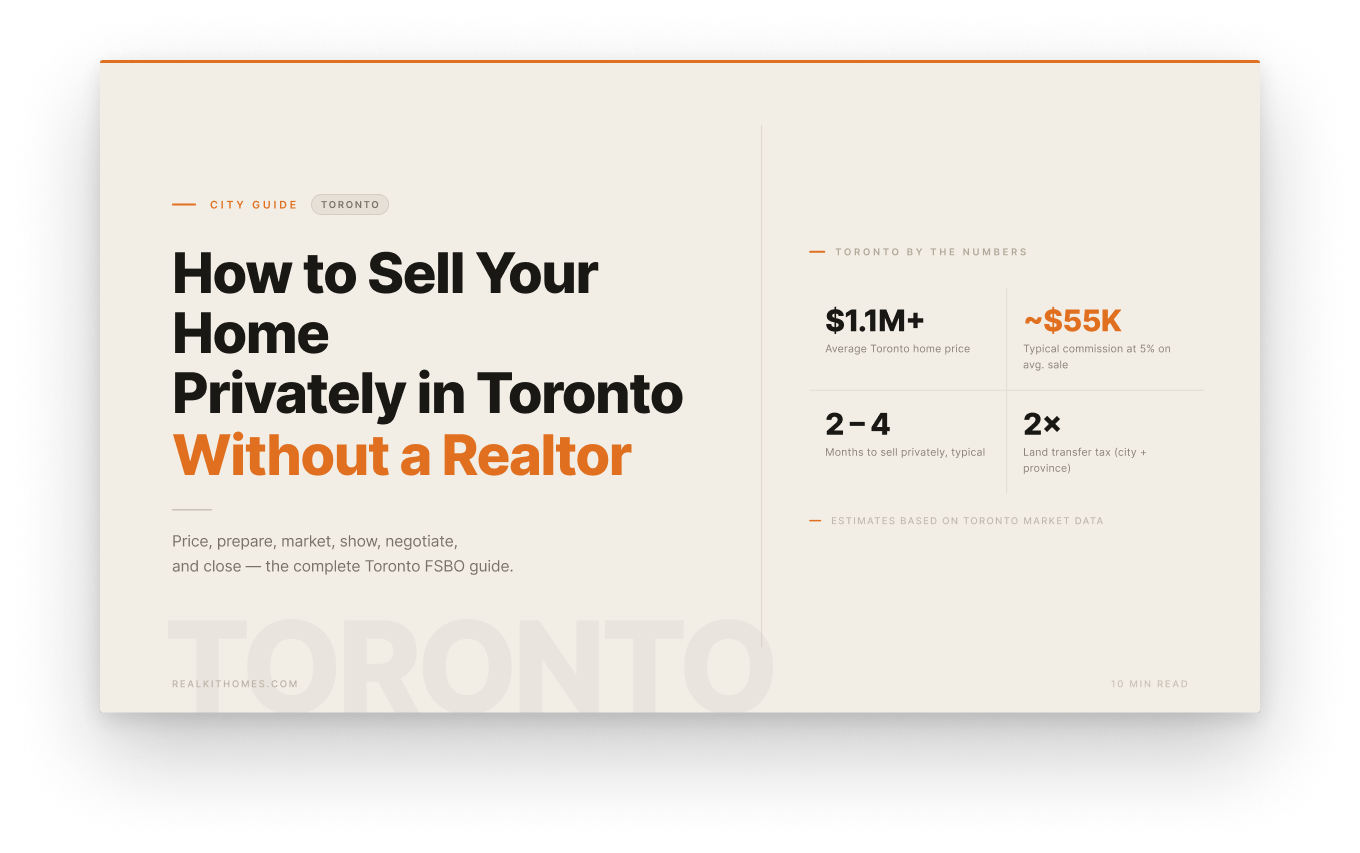
Yes, you can sell your own home privately in Toronto without hiring a listing Realtor. You are allowed to market your property, communicate directly with buyers, arrange showings, receive written offers, negotiate terms, and work with a real estate lawyer to complete the legal closing.
Private selling does not mean the process becomes informal. You take on the work a listing representative would normally coordinate: pricing, preparation, marketing, responding to inquiries, managing showings, tracking buyers, reviewing offers, negotiating, and keeping the transaction moving until closing.
Toronto makes this both promising and demanding. There are many active buyers, but they are comparing a large number of property types, locations, and building options. A buyer looking at a downtown condo may compare monthly fees, building amenities, transit access, locker and parking ownership, and status-certificate details. A buyer considering a freehold home in Scarborough, Etobicoke, North York, East York, or the west end may focus more on lot size, parking, basement layout, schools, commute, and the condition of major systems.
A private sale can work well when you are realistic about the price, prepared to respond promptly, and willing to get legal input before you commit to an offer. It is less about putting up a sign and more about managing a serious transaction in an organized way.
If you are still deciding whether the work and trade-offs fit your situation, it helps to understand the real responsibilities behind a private sale.
2.Is It Legal to Sell Privately in Toronto?
A homeowner can sell their own property privately in Toronto. You do not need to hire a listing Realtor to sell a home you own.
That said, private selling does not remove the legal steps involved in an Ontario real estate transaction. A real estate lawyer is normally involved to review or prepare legal documents, deal with title matters, coordinate closing funds, arrange mortgage discharge where needed, and complete the transfer of ownership.
A buyer may also have their own real estate agent. Their agent represents the buyer, not you. They may request a showing, ask questions, present an offer, and negotiate on their client’s behalf. As the seller, you decide whether and how you wish to work with buyer representatives, including whether your sale strategy includes compensation for a buyer’s representative.
You should speak with an Ontario real estate lawyer when you have questions about an Agreement of Purchase and Sale, disclosure, title, tenants, estate matters, ownership, conditions, or any other transaction-specific legal issue. A lawyer can explain the implications of your actual deal. This guide is practical information, not legal advice.
3.Toronto Property Considerations
Toronto is not one housing market. A condo in CityPlace, a semi-detached home near The Danforth, a detached house in North York, and a townhouse in Etobicoke can attract very different buyers and require different preparation.
Condo apartments and lofts
Condominiums are a major part of Toronto’s housing mix, so private condo sellers need to be ready for questions that may not come up with a freehold home.
Buyers commonly ask about:
- Monthly condominium fees and what they include
- Parking and locker ownership or rental arrangements
- Building amenities and current rules
- Pet, moving, renovation, and short-term rental rules
- Recent or planned building work
- Reserve fund information and special assessments
- Concierge, elevator booking, visitor parking, and access procedures
A buyer may make their purchase conditional on reviewing the status certificate and related condominium documents. Obtaining current information early can prevent avoidable delays when an interested buyer asks for it.
Your lawyer can advise on what needs to be provided and how condominium documents affect your specific transaction. Keep copies of the documents you have, but do not make assumptions about what a buyer or their lawyer will accept without getting appropriate advice.
Freehold homes, semis, and townhouses
For Toronto freeholds, buyers will often look closely at details that are easy to overlook in a generic listing:
- Legal and practical parking arrangements
- Mutual driveways or laneway access
- Basement ceiling height, separate entrances, and finished space
- Lot dimensions and outdoor space
- Recent roof, window, furnace, air conditioner, plumbing, or electrical work
- Evidence of renovations, permits, or warranties where available
- Whether a rear addition, deck, garage, or basement suite raises questions a buyer may investigate
A basement can be a major value factor in Toronto, but describe it accurately. Avoid presenting an area as a legal suite, income unit, bedroom, or permitted renovation unless you have the information to support that description.
Tenanted Toronto properties
Selling a tenanted property requires extra care. Buyers may want to review lease information, rent details, access expectations, and possession terms. Tenants also have rights that can affect showing arrangements and a buyer’s intended use of the property.
Do not assume that selling a home automatically determines when a tenant must leave. If your Toronto property is occupied by a tenant, speak with a lawyer early and make sure your marketing, showing plan, offer terms, and closing expectations are aligned with the actual situation.
4.Pricing Your Home in Toronto
Toronto-wide averages are not enough to price a private sale well. A city-wide number can hide major differences between property types, neighbourhoods, buildings, lot sizes, and buyer demand.
Your best starting point is a set of truly comparable properties.
Look at:
- Recent sales of similar property types
- Current listings competing for the same buyers
- Listings that have been sitting, relisted, or reduced
- Property condition and level of renovation
- Layout, usable square footage, and bedroom count
- Parking, locker, outdoor space, and views
- Lot size and location for freehold homes
- Condo fees, amenities, building age, and maintenance history for condos
- Timing of the comparable sale and current market conditions
A renovated two-bedroom Toronto condo with parking, a locker, and lower monthly fees is not directly comparable with a similar-sized unit in another building with no parking and substantially higher fees. The same is true for freeholds. A renovated semi on a quiet street is not automatically comparable with an older semi near a major arterial road simply because both have three bedrooms.
An illustrative pricing example
This example is illustrative only. It is not current Toronto market data.
Imagine you are selling a two-bedroom condo with one parking space and a locker. You find three recent sales in your building. One sold at the higher end after a full kitchen and bathroom renovation. Another sold lower because it had no parking. A third had a similar layout but was on a lower floor and needed cosmetic work.
Rather than copying the highest sale, you would note the differences, compare your unit with current active listings in the building and nearby, and choose an asking strategy that reflects your unit’s condition, monthly fees, floor, exposure, parking, locker, and buyer competition.
That work can feel slow, but it is better than beginning with an emotional number and reducing the price after early buyers have moved on.
The risk of overpricing and underpricing
Overpricing can reduce showing requests, make competing listings look like better value, and create pressure for later reductions. Underpricing can also be risky if you do not have enough exposure or a plan for managing buyer interest and offers.
Your asking price should have a purpose. You may be trying to attract early interest, position the home alongside recent comparables, test a reasonable premium for a meaningful feature, or align with a specific moving timeline.
For more help understanding how a comparative market analysis differs from a formal valuation, review the difference between a CMA and an appraisal before relying on one number alone.
[Internal Link: CMA vs Appraisal: What Ontario Private Sellers Need to Know]
When outside pricing help is useful
Consider an independent appraisal or professional pricing input if:
- Your property is unusually large, renovated, or difficult to compare
- You own a unique loft, heritage home, waterfront-adjacent property, or mixed-use property
- There are few recent comparable sales
- Family members disagree about value
- You are setting a high-stakes price and want an independent reference point
A pricing opinion can inform your strategy, but it does not guarantee the amount a buyer will offer or the value a lender will support.
5.Private-Sale Costs and Commission Context
Selling privately may reduce or remove the cost of hiring a traditional listing representative, but it does not make a sale cost-free.
Your actual costs may include:
- Legal fees and disbursements
- Mortgage payout or discharge costs, if applicable
- Potential mortgage prepayment charges
- Preparation, repairs, cleaning, staging, photography, and advertising
- Moving and storage
- Flat-fee listing or marketing services, if you choose them
- Buyer-agent compensation, if you choose to offer it
- Condo document costs, where applicable
- Utility, property-tax, and other closing adjustments
Commission structures and amounts vary. A private seller may decide to offer compensation to a buyer’s representative as part of their strategy, particularly because many Toronto buyers work with agents. Another seller may choose not to. Either approach can affect buyer interest, negotiations, and your final net proceeds.
Land transfer tax is generally a buyer-side cost, not a seller closing cost. Toronto buyers may also face a municipal land transfer tax in addition to Ontario land transfer tax, subject to applicable rules and exemptions. It is still useful for sellers to understand because it may affect a buyer’s overall budget and negotiating position.
An illustrative net-proceeds comparison
This example is illustrative only. It is not a quote, a commission estimate, or a prediction of your result.
Imagine two ways of selling the same Toronto home:
- In one path, the seller hires a full-service listing representative and pays the agreed listing-side costs and any agreed buyer-side compensation.
- In another path, the seller markets privately, pays for preparation, legal support, and any chosen advertising or buyer-agent compensation, then manages the work themselves.
The private route may lower some selling costs, but the seller should compare the complete outcome: likely sale price, marketing reach, time required, buyer-agent strategy, property preparation, legal costs, and the risk of price reductions or a failed deal.
The better question is not, “What commission am I avoiding?” It is, “Which path is most likely to produce the result I need after all costs, time, and trade-offs?”
6.Prepare Before You List
Preparation is where a private seller earns credibility. Buyers are more comfortable when the home is clean, the facts are clear, and basic questions can be answered without scrambling through drawers or email threads.
Prepare the home buyers will actually see
Focus first on visible issues that affect a buyer’s confidence:
- Clean and declutter the entry, kitchen, bathrooms, and main living areas
- Address small repairs such as loose handles, damaged caulking, dripping taps, burnt-out bulbs, or visible wall marks
- Remove personal documents, medications, valuables, and spare keys
- Make sure exterior access, walkways, house numbers, and entry lighting are clear
- Check that all rooms can be photographed and shown comfortably
- Consider how the property looks in daylight and at the times buyers are most likely to visit
For a condo, think beyond the unit. Confirm how visitors enter, whether the concierge needs advance notice, whether elevator bookings are required, and how you will explain parking or visitor access.
Gather your private-sale file
Before going live, gather what you can:
- Current property-tax information
- Recent utility information
- Details and dates for major repairs or upgrades
- Renovation invoices, permits, warranties, and manuals where available
- Survey or reference plan, if you have one
- Mortgage information you may need for your own planning
- Condo fee details and available condominium documents, if applicable
- Tenant records and leases, if applicable
- A written list of fixtures, chattels, inclusions, and exclusions
The City of Toronto offers tax and utility certificate services, and sellers may need current account information as the transaction moves toward closing. Your lawyer can tell you what they require for your file.
Be accurate about known issues
Do not use vague or overly polished listing language to avoid a difficult fact. If there is a known issue, get appropriate advice before you make representations about the property.
This is especially important for past water events, structural concerns, work completed without clear records, tenant matters, shared access, and condo issues. If you are unsure what should be disclosed or how, speak with your lawyer.
For a practical breakdown of the paperwork buyers and professionals may ask for, keep your document collection focused from the start.
7.Marketing, Buyer Inquiries, and Showings
A strong private listing helps buyers decide whether the home is worth a visit. It should be clear, accurate, and easy to scan.
Include:
- Property type and location
- Bedrooms, bathrooms, parking, and outdoor space
- Condo fees and inclusions where relevant
- Major upgrades, with dates only where you can support them
- Accurate square footage if available and appropriately sourced
- A clear explanation of what is included and excluded
- Quality photos that show the home honestly
Avoid trying to answer every question in the listing. The goal is to give buyers enough trustworthy information to request a showing.
Keep buyer communication organized
Private sellers can quickly end up with inquiries across text messages, email, social media, phone calls, and listing platforms. That becomes risky when several buyers request different showing times or ask for the same documents.
Keep a basic record of:
- Buyer or agent name
- Contact information
- Showing date and time
- Questions asked
- Documents shared
- Feedback after a viewing
- Whether the person has indicated serious interest or a financing plan
Use one written source of truth. It can be a well-maintained system or a private-sale workspace, but it should not rely on your memory alone.
Screen and show safely
A private seller does not need to treat every inquiry as a guaranteed buyer. Before arranging a viewing, confirm basic details such as the visitor’s name, preferred contact information, whether they are working with an agent, and their preferred showing time.
For safety and practicality:
- Schedule appointments rather than allowing unannounced walk-ins
- Avoid sharing unnecessary personal information
- Remove valuables, medications, sensitive paperwork, and spare keys
- Let someone know when a showing is scheduled
- Consider having another adult nearby for showings
- Keep a record of who visited
- Use clear access instructions instead of leaving doors unlocked
- Avoid allowing visitors to roam through storage areas, garages, or utility rooms without reasonable supervision
Toronto showing logistics
Toronto showings often have logistical details that affect the buyer experience.
For a condo, confirm:
- Concierge instructions
- Visitor parking rules
- Elevator reservations or restrictions
- Whether buyers need to be signed in
- Access to lockers, parking spaces, amenities, or bike storage
- Building rules about open houses or common areas
For a freehold home, be ready to explain:
- Street, laneway, garage, or pad parking
- Shared driveways or access arrangements
- Whether you need to coordinate around school pickup, traffic, or a narrow street
- How buyers should enter if there is construction, landscaping, or a side-gate route
Showing-day checklist
Before each showing:
- Open blinds and turn on key lights
- Tidy kitchens, bathrooms, and entry areas
- Secure valuables and personal information
- Remove pets or set up a safe plan for them
- Confirm the appointment and access instructions
- Make parking, elevator, concierge, or entry details clear
- Have basic property facts available
- Leave space for buyers to walk through and discuss the home comfortably
- Record feedback after the showing while it is still fresh
For a deeper look at the workload that builds once a private listing is live, Toronto sellers should plan for the regular follow-up, cleaning, and scheduling that FSBO requires.
8.Offers and Negotiation
An offer is more than a price.
The highest offer may not be the strongest offer if it comes with uncertain financing, a long list of conditions, a difficult closing date, unclear inclusions, or a buyer who cannot meet key deadlines.
When you receive a written offer, look at:
- Purchase price
- Deposit amount, timing, and the proposed arrangement for holding it
- Financing condition and deadline
- Inspection condition and deadline
- Status-certificate condition for condos, where applicable
- Sale-of-property conditions, if any
- Closing date
- Inclusions and exclusions
- Requested repairs, credits, or additional access
- The buyer’s readiness and the clarity of the offer
Verbal interest is not the same as a written offer. A message saying, “We can probably do your asking price,” is not a completed deal.
Work with your lawyer before committing
A serious offer is the right time to involve your lawyer. They can review the Agreement of Purchase and Sale, explain provisions you are considering, and help you understand the legal effect of conditions, amendments, counteroffers, and deadlines.
Do not rely on text messages or casual assurances to document important changes. If terms are changing, make sure the change is properly handled in writing with legal guidance.
Counteroffers need version control
Private negotiations can become confusing when several versions of an offer move through email and text.
Keep each version clearly labelled and record:
- When it was received
- What changed
- Who signed it
- Whether it is still open
- The response deadline
- What your lawyer has reviewed
Realkit can help keep buyer messages, written offers, counteroffers, and transaction milestones organized in one workspace, so you have a clearer file when you need to compare terms or speak with your lawyer.
Toronto sellers who expect interest from represented buyers should also decide in advance how they will communicate with buyer agents and whether their pricing and compensation strategy is clear.
[Internal Link: How to Work With Buyer Agents When You’re Selling Privately in Ontario]
9.After an Offer Is Accepted
Accepted, firm, and closed are different stages.
An offer may be accepted but still conditional. For example, the buyer may need time to confirm financing, complete an inspection, review a condo status certificate, or satisfy another condition listed in the Agreement of Purchase and Sale.
A deal generally becomes firm after conditions are fulfilled, waived, or otherwise dealt with according to the agreement. Closing happens later, when the lawyers complete the legal work, funds are transferred, title is registered, and possession is provided under the terms of the transaction.
What happens during the conditional period
During a conditional period, your tasks may include:
- Providing agreed documents
- Coordinating inspection or appraisal access
- Responding to reasonable questions through the appropriate channel
- Tracking deadlines carefully
- Speaking with your lawyer before agreeing to amendments or extensions
The buyer’s lender and mortgage professional may become more involved during financing. The buyer may need an appraisal or additional documentation. That is mainly the buyer’s financing process, but it can affect your sale timeline.
What happens before closing
As closing approaches, your lawyer will handle much of the legal coordination. You may be asked for identification, mortgage details, documents, signatures, information about utilities, keys, or other practical matters.
Your lawyer will handle the legal closing work, including title-related steps, funds, and mortgage discharge coordination where applicable. Stay responsive. Delays often become harder to solve when a closing date is near.
Private sellers should also plan moving, final cleaning, utility arrangements, access instructions, and the timing for keys or fobs. For condos, make sure you understand the building’s move booking rules well before closing.
10.How Realkit Helps Toronto Private Sellers
A Toronto private sale can involve many moving pieces: buyers, buyer agents, concierge instructions, showings, documents, offer versions, condition dates, lawyers, and mortgage professionals.
Realkit helps homeowners keep that operational work in one place. You can create and manage a private listing, coordinate showings, keep buyer messages and activity organized, manage versioned offers and negotiations, track an accepted transaction, and coordinate with lawyers and mortgage professionals.
Realkit is not a brokerage, law firm, lender, escrow provider, or deposit holder. It does not provide legal advice, replace a lawyer, hold deposits or closing funds, guarantee a sale, or guarantee buyer financing.
Create your Toronto private-sale workspace with Realkit.
11.Common Mistakes to Avoid
Using broad Toronto averages to price a specific property
Toronto is too varied for city-wide averages to answer the pricing question on their own. Compare the right property type, building, condition, parking arrangement, lot, and location. A mismatch in any of these can make a “comparable” misleading.
Listing a condo without key building details ready
Condo buyers often need more than photos and a monthly fee. Delays around status-certificate information, parking or locker details, building rules, special assessments, or elevator access can weaken buyer confidence.
Treating buyer inquiries as casual messages
A private seller needs a consistent response system. If you lose messages, forget a showing, or provide different details to different buyers, you create confusion and may lose serious interest.
Allowing unmanaged showings
Unannounced visits, unclear access instructions, and no record of who entered your home are avoidable problems. Use appointments, protect your personal information and valuables, and maintain a record of visitors.
Looking only at the headline offer price
A higher number with weak financing, difficult conditions, or an unworkable closing date may not be the best offer. Review the entire offer with your lawyer before deciding.
Negotiating important changes by text
Texts and emails may be useful for communication, but they should not replace properly documented contract changes. Keep written versions organized and get legal input before committing to amendments or counteroffers.
Waiting until after signing to find a lawyer
Have a real estate lawyer selected before you receive a serious offer. It is much easier to make careful decisions when you are not trying to locate professional help during a short offer deadline.
13.Sources
- City of Toronto: Property Taxes & Utilities
- City of Toronto: Buying, Selling or Moving
- City of Toronto: Tax and Utility Certificate Service
- Toronto Regional Real Estate Board: Market Watch
- Toronto Regional Real Estate Board: Market Data
- Government of Ontario: Land Transfer Tax
- Appraisal Institute of Canada: For Residential Property Owners
- Appraisal Institute of Canada: For Mortgage Professionals
- Real Estate Council of Ontario: Consumer Information on Working With Real Estate Professionals